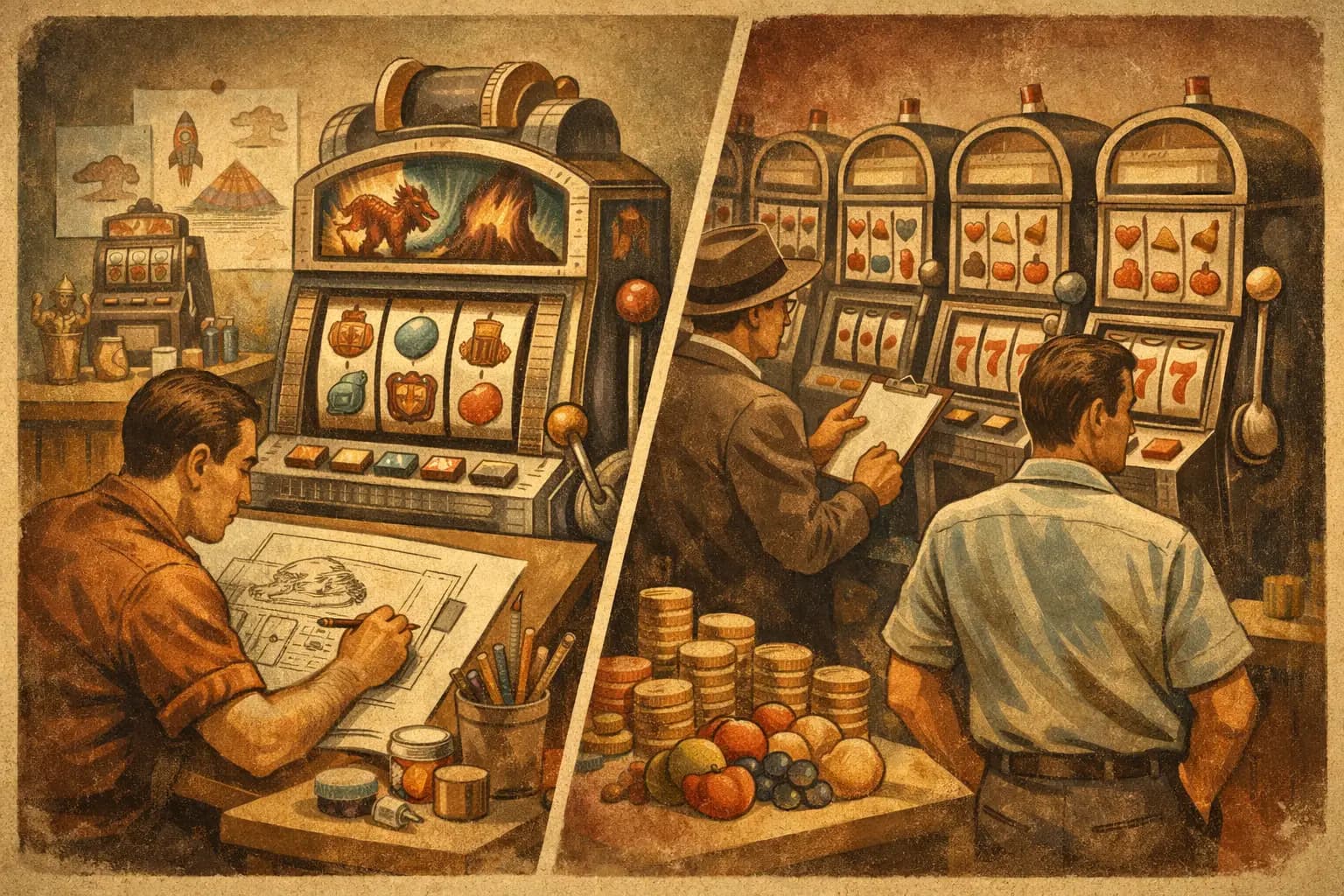
If your content roadmap says "exclusive" but the build is a recycled engine with new art, you do not have a proprietary game. You have packaging. That is the real tension in custom slots vs reskinned slots, and for operators, the difference shows up fast in conversion, retention, and long-term margin.
A reskin can look good in a deck. It can even perform decently for a short run if the math is proven and the theme lands. But operators who want defensible content, stronger brand identity, and real asset ownership usually hit the ceiling quickly. The issue is not whether reskinned games work at all. The issue is what they actually give you - and what they never will.
Custom slots vs reskinned slots: the real commercial difference
On paper, both options can launch a slot. In practice, they solve different problems.
A reskinned slot is usually an existing game framework with modified visuals, changed symbols, renamed features, and sometimes small tweaks to bonus presentation. The underlying engine, game flow, and often the math profile remain close to the original. That makes it fast and relatively low-risk for a supplier. It also makes it hard for an operator to claim genuine differentiation.
A custom slot is built around your commercial objective from the start. That means theme, feature design, reel behavior, bonus pacing, volatility targets, RTP variants, session dynamics, and branding logic are aligned before production begins. It is not just a design pass. It is product development.
That distinction matters because operators are not buying artwork. They are buying outcomes. Better first-session engagement. Cleaner alignment with player segments. Stronger CRM hooks. More control over exclusivity. Fewer awkward overlaps with games already sitting in aggregator catalogs.
Where reskinned slots make sense
There is a place for reskins. Pretending otherwise is lazy.
If you need to fill a release calendar, test a market theme quickly, or launch branded content with a compressed budget and timeline, a reskin can be a practical move. It is also useful when the business case does not justify full custom production - for example, when a market is unproven, traffic is low, or the title is meant to support a campaign rather than anchor a portfolio.
Reskins also reduce some production complexity. Existing engines have known behaviors. QA paths are shorter. Certification can be more straightforward when the core game logic is already established. For teams under pressure to ship something fast, that predictability has value.
The catch is simple: you are optimizing for speed, not strategic advantage. If everyone can get a version of the same product architecture, your upside is limited by design.
Why custom slots carry more weight
Custom games take longer because more decisions are made on purpose. That is not inefficiency. That is control.
A strong custom slot lets an operator tune the product around real business inputs: target jurisdictions, preferred volatility bands, market-specific visual language, wallet and bonus mechanics, and the kind of session profile the casino wants to encourage. If your VIP cohort responds to high-swing bonus buys, that changes feature planning. If your brand wins on lighter entertainment and broader casual appeal, the pacing and presentation should reflect that.
This is where custom work separates serious operators from content renters. Original math design, unique feature combinations, branded UX patterns, and owned source code create a game that cannot be copied by another operator through a basic content deal.
Exclusivity is not just a marketing line. It affects acquisition efficiency, retention logic, and brand recall. If players associate a title with your casino, not a supplier catalog, the game starts acting like an asset instead of a temporary campaign tool.
The hidden cost of "faster" content
Reskinned slots are often sold as the faster, cheaper option. Sometimes they are. But speed without ownership can get expensive.
First, there is the portfolio problem. If your content mix becomes too dependent on recycled frameworks, your lobby starts to feel interchangeable with every other operator buying from the same supply chain. That weakens positioning. It also makes it harder for content managers to build a clear release strategy around novelty.
Second, there is the legal and operational layer. Many operators assume a reskin gives them more control than it actually does. In reality, source code access may be restricted, math files may stay with the supplier, and certification scope may be tied to their structure, not yours. That creates friction later if you want to migrate, modify, localize, or re-certify.
Third, there is the commercial ceiling. If the title performs, you may still be building equity in someone else's base product. You can market it, promote it, and scale it, but you may not fully own the thing that made it work.
That is a weak position for operators that think in terms of long-term content value.
Custom slots vs reskinned slots in regulated markets
This is where the conversation gets more technical.
In regulated environments, the difference between custom slots vs reskinned slots is not just creative. It is procedural. Certification, math documentation, source control, change management, and jurisdiction-specific submissions all become relevant very quickly.
With reskins, the supplier often controls the underlying compliance architecture. That can be fine if your requirements match their standard operating model. It becomes a problem when you need flexibility - different RTP packs, custom feature disclosures, market-specific game rules, or a tighter handoff to your own infrastructure and compliance teams.
With a properly built custom title, those pieces can be structured for your rollout plan from day one. The game can be scoped around the target market, certification pathway, wallet behavior, and platform requirements instead of being retrofitted later. That usually reduces downstream friction, even if the upfront planning is more involved.
Operators expanding across multiple jurisdictions should care about this. A game that is easy to approve, adapt, and maintain has real operational value. Not glamorous value. Real value.
What product teams should ask before choosing
If you are evaluating suppliers, the right questions are rarely about theme alone.
Ask what exactly is new in the game. Is the math original? Are the feature mechanics custom or borrowed? Who owns the source code? What documentation is delivered at handoff? Can the title be certified independently? What happens if you want to revise the RTP matrix, localize the game logic, or migrate to another stack later?
You should also ask how much of the timeline is actual development versus cosmetic adaptation. Many "custom" projects are just dressed-up templates with limited room to move once production starts.
A serious supplier should be able to explain the engine decision, the math philosophy, integration scope, certification path, and post-launch support model without hiding behind vague creative language.
The right choice depends on what you are building
Not every operator needs every slot to be fully custom. That is not how smart roadmaps work.
If your goal is content velocity, a reskin may be good enough for selected campaigns or lower-priority releases. If your goal is to build owned IP, sharpen brand differentiation, and create games that competitors cannot mirror next quarter, custom is the better instrument.
The best operators usually split the difference intentionally. They use commodity content where commodity content is acceptable, and they reserve original builds for the titles that matter most commercially. The mistake is treating those two buckets as interchangeable.
They are not interchangeable. One gives you access. The other gives you leverage.
That is why teams working with lean specialist partners are moving away from bloated studio models and catalog-first thinking. They want original games built around their market reality, not recycled content wearing a fresh costume. Slot Studio fits that shift because the model is simple: build fast, build original, and transfer the assets that actually matter.
If a game is supposed to strengthen your brand, improve your margins, and stay exclusive, it should be built that way from the first line of the spec.