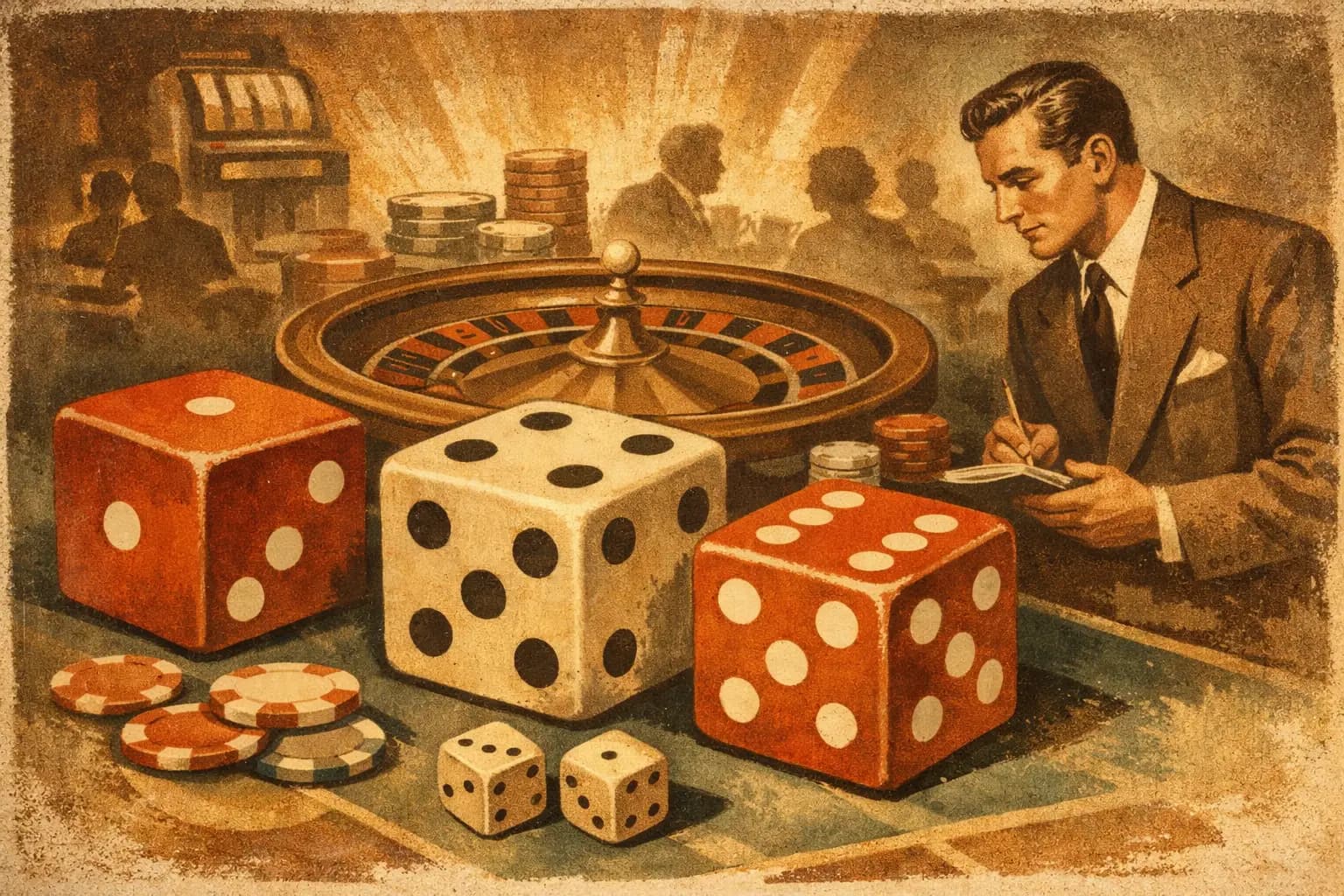
A dice game can go live fast. That does not mean it should be built casually.
Dice game development for operators looks simple from the lobby view - one core action, a clean risk ladder, a fast result loop. But the commercial reality is tighter than that. If the math profile is off, retention drops. If the UX feels recycled, the game disappears into the fast-games grid. If certification or integration work starts late, your "quick win" becomes another delayed launch.
For operators, dice is not just a lightweight side product. Done right, it is a high-frequency betting format that fills a different job than slots, crash, or live casino. It gives players speed, control, and transparent risk. It also gives the operator a format that can be tuned precisely around session length, bankroll behavior, and cross-sell strategy.
What operators actually need from dice game development
The wrong approach is to treat dice as a commodity build. A basic over-under mechanic is easy. A production-grade dice product is not.
Operators need three things at the same time: differentiated gameplay presentation, reliable monetization math, and low-friction launch mechanics. Miss one and the value drops fast. An original skin over generic math will not move. Great math trapped in a clumsy front end will underperform. A solid game that takes six months to certify loses its business case.
That is why serious dice game development for operators starts with operating conditions, not visual references. Which jurisdictions matter? Which wallet and bonus systems need to be supported? Is the goal acquisition, retention, or VIP volume? Does the game sit inside a sportsbook-led product, a crypto-heavy casino, or a slots-first brand trying to add faster sessions?
Those answers shape the build more than most teams expect.
Dice is simple on the surface, precise underneath
Players understand dice instantly. That is part of the appeal. They can select a target, see the win chance shift, and place repeated bets with almost no onboarding.
What they do not see is the balancing work under the hood. Dice lives or dies on confidence. Players need to feel that the game is fair, responsive, and worth repeating. Operators need a hold profile that makes sense over volume without making the product feel punitive.
That creates a design problem worth taking seriously. House edge cannot be the only lever. Bet flow, animation timing, streak perception, payout readability, and manual versus auto-play behavior all influence whether a player stays for 90 seconds or 14 minutes. In a fast game, those differences are not cosmetic. They change revenue.
A good dice build also respects transparency. If a player cannot quickly understand probability, potential payout, and result history, trust erodes. This is one of the few casino formats where clarity is part of the product itself.
The math model matters more than the theme
Operators often ask about visual direction first. That is understandable, but dice is math-led content.
The core decisions usually start with RTP range, target volatility, max win logic, and how aggressively the game should reward high-risk selections. Then come the practical questions: What is the minimum and maximum stake? How does the game behave under turbo play? Should the interface encourage precision selection, slider-driven selection, or preset risk bands? Are there optional features that change pacing without muddying the core loop?
There is no single correct profile. A dice game built for a broad casino audience may need cleaner volatility and more approachable stake progression. A game aimed at high-frequency offshore bettors may tolerate sharper risk curves and faster action. A regulated market build may need tighter messaging, clearer disclosure states, and feature decisions shaped by approval reality rather than product ambition.
This is where experienced development matters. Anyone can publish a dice mechanic. Far fewer teams can tune one for operator KPIs and market constraints.
Speed is valuable, but only if the pipeline is real
Dice is often chosen because it should move faster than a slot. That logic is sound. The mistake is assuming that speed comes from reducing standards.
Real speed comes from having a senior team, a stable game framework, clear math sign-off, and integration patterns that do not require reinvention every time. It also comes from making certification readiness part of the production process instead of a cleanup step after the build is finished.
For operators, the hidden delays are familiar. Requirements drift. Front-end changes break approved logic. RNG documentation arrives late. The game is playable but not integration-ready. The studio has built a demo, not a launch product.
A credible partner avoids that trap by treating dice as a deployable product from day one. That means source architecture, event handling, wallet behavior, autoplay controls, localization planning, and reporting hooks are addressed early. Short build cycles are useful only when they produce something your platform team can actually ship.
Exclusivity changes the commercial value
Most operators do not need another shared fast game with a fresh background and a new logo. They need content that helps them stop looking interchangeable.
That is why exclusivity matters more in dice than some buyers assume. The mechanic may be familiar, but the market still notices when a game is visibly yours, mathematically tuned to your audience, and unavailable in ten competing casinos. Exclusivity turns a fast game from filler into product infrastructure.
This is especially relevant for operators trying to reduce dependence on aggregator sameness. Shared catalogs are useful for coverage, but they rarely create identity. Proprietary fast games can.
A custom dice title also gives you more room to align game behavior with your commercial model. You can shape limits, UX emphasis, bonus compatibility, retention hooks, and brand presentation without negotiating around a supplier's generic roadmap.
Integration and certification are part of the product
For technical buyers, this is usually where the real filtering happens.
A dice game is not finished when the gameplay works. It is finished when it connects cleanly to the operator stack, supports the required event flows, and comes with the documentation needed for compliance and launch. That includes math documentation, game rules, RTP declarations, source package access where relevant, and certification support aligned to the target jurisdiction.
The more regulated the market, the less patience there is for vague delivery language. Buyers want to know what engine is being used, how outcomes are generated, what testing path is expected, and what gets handed over at the end. They also want confidence that the studio understands platform-side realities such as wallet callbacks, session recovery, authentication flows, and reporting consistency.
This is where lean specialist teams often outperform larger studios. Fewer layers. Faster decisions. Less theater around handoff. More attention to the actual shipping path.
What to ask before you greenlight a dice build
If you are evaluating dice game development for operators, ask questions that reveal execution quality fast.
Ask how the math profile will be defined and approved. Ask what is customizable versus fixed. Ask what certification artifacts are included. Ask whether the game is exclusive and whether source code transfer is part of the deal. Ask how long integration usually takes once the game is feature-complete. Ask who actually builds the game - senior developers or a chain of account managers and outsourced production.
Also ask what happens after launch. Fast games benefit from iteration. You may want UI refinements, adjusted presets, market-specific localization, or follow-on variants that build on the same core. If the studio disappears after delivery, you are buying a one-time asset instead of a living product line.
That is one reason operators work with teams like Slot Studio. The appeal is not just the game itself. It is the combination of fast execution, cert-ready delivery, exclusivity, and operator-side practicality.
Where dice fits in a broader content strategy
Dice should not be judged by slot metrics alone. It serves a different role.
For some operators, it is a session accelerator sitting next to crash, limbo, and mines. For others, it is a clean entry point for players who want direct control over risk rather than feature-heavy gameplay. In sportsbook-adjacent environments, it can work as a short-cycle betting product that feels closer to active decision-making than passive spinning.
That means success depends on placement, promotion, and player fit. A great dice game can still underperform if it is buried in the wrong category or presented to the wrong segment. On the other hand, a well-positioned exclusive title can become one of the most efficient pieces of proprietary content in the lobby.
The operators getting the most from fast games understand this. They do not buy dice because it is easy. They buy it because it is efficient, flexible, and commercially sharp when the build is done properly.
If you are considering a new fast game, treat dice like what it is: a simple format with very little room for weak execution. Build it fast, yes. Build it distinct, cert-ready, and operator-fit first.